

 Deliver within 90 minutes*
 UK Registered Pharmacy
 Discreet, Confidential Service

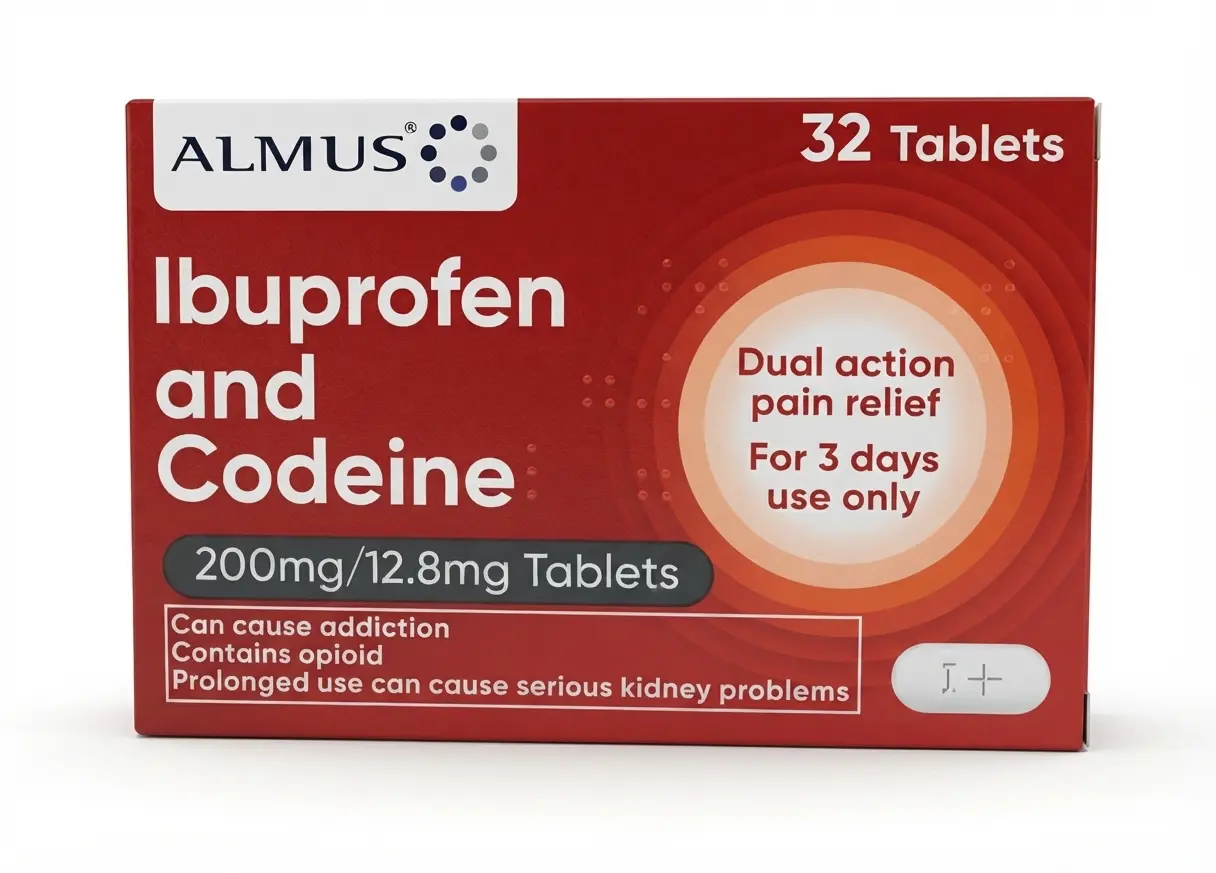
Ibuprofen and Codeine 200mg/12.8mg Tablets – 32 Tablets
Ibuprofen and Codeine 200mg/12.8mg Tablets provide short-term relief from acute moderate pain that has not been relieved by painkillers such as paracetamol or ibuprofen alone. This medicine is for a maximum of three days’ use and can cause addiction. Available to suitable adults aged 18 years and over following a pharmacist assessment.
Select Quantity
What are Ibuprofen and Codeine Tablets?
Ibuprofen and Codeine Tablets contain two pain-relieving ingredients:
- Ibuprofen is a non-steroidal anti-inflammatory drug (NSAID) that helps reduce pain and inflammation.
- Codeine is an opioid painkiller that acts on the central nervous system to relieve pain.
They are used for the short-term treatment of acute moderate pain when painkillers such as paracetamol, ibuprofen or aspirin have not worked on their own.
They may be used for:
- Migraine and headache
- Dental pain
- Backache
- Muscular and rheumatic pain
- Neuralgia
- Period pain
This medicine is not intended for mild pain or long-term pain management.
Directions
Adults aged 18 years and over
Take one or two tablets with water every four to six hours when required.
- Leave at least four hours between doses.
- Do not take more than six tablets in 24 hours.
- Take with or just after food to reduce the chance of stomach upset.
- Use the lowest effective dose for the shortest possible time.
- Do not take for longer than three days.
If your pain does not improve within three days, or becomes worse, stop taking the medicine and speak to a doctor or pharmacist.
Do not take more than the recommended dose. Contact NHS 111 immediately if you take more than directed, even if you feel well.
Important safety information
This medicine contains codeine and can cause addiction if taken continuously for more than three days.
Prolonged use may cause withdrawal symptoms when treatment is stopped. Taking painkillers for headaches for longer than recommended can also make headaches worse.
Do not take this medicine:
- If you are allergic to ibuprofen, codeine, aspirin, another NSAID or any ingredient in the tablets
- With another medicine containing ibuprofen, aspirin, codeine or another NSAID
- If you currently have, or have previously had, recurrent stomach ulcers or gastrointestinal bleeding
- If you have severe heart, liver or kidney failure
- If you have breathing difficulties or respiratory depression
- If you have chronic constipation
- If you are breastfeeding
- During pregnancy
- If you take an MAOI or have stopped taking one within the last 14 days
- If you know that you are an ultra-rapid metaboliser of codeine
Speak to a pharmacist or doctor before taking it if you:
- Have asthma or allergic disease
- Have high blood pressure or heart problems
- Have kidney or liver problems
- Have inflammatory bowel disease
- Have a history of stomach problems
- Take anticoagulants, corticosteroids, antiplatelet medicines or certain antidepressants
- Are taking prescribed medication or have any other medical conditions
- Have a personal or family history of substance misuse or dependence
Codeine may cause dizziness or drowsiness. Do not drive, cycle or operate machinery if affected. Avoid alcohol because it can increase drowsiness and other side effects.
Always read the patient information leaflet supplied with the medicine.
Possible side effects
Possible side effects include:
- Indigestion or stomach discomfort
- Nausea or vomiting
- Constipation
- Dizziness or drowsiness
- Headache
- Skin rash
Stop taking the medicine and seek urgent medical help if you experience difficulty breathing, swelling of the face or throat, a severe skin reaction, black stools, vomiting blood, severe abdominal pain, chest pain or signs of a serious allergic reaction.
What are Ibuprofen and Codeine Tablets used for?
They provide short-term relief from acute moderate pain when painkillers such as paracetamol, ibuprofen or aspirin have not worked on their own. This can include migraine, headache, dental pain, backache, muscular pain, neuralgia and period pain.
How many tablets can I take?
Adults aged 18 years and over can take one or two tablets every four to six hours when required. Leave at least four hours between doses and do not take more than six tablets in 24 hours.
How long can I take Ibuprofen and Codeine Tablets?
Do not take them for longer than three days. Codeine can cause addiction when taken continuously for more than three days. Speak to a doctor or pharmacist if your pain continues or becomes worse.
Can I take them with paracetamol?
Paracetamol does not contain ibuprofen or codeine and may be suitable for some people to take alongside this medicine. Check with a pharmacist or doctor first if you take other medicines or have any medical conditions.
Can I take them with ibuprofen or Nurofen?
No. Do not take this medicine with additional ibuprofen, Nurofen, aspirin or another NSAID because this increases the risk of side effects.
Can I take them with co-codamol or another codeine product?
No. Do not take this medicine with co-codamol or any other medicine containing codeine or another opioid.
Can Ibuprofen and Codeine Tablets cause addiction?
Yes. Codeine can cause addiction, particularly if it is taken for longer than directed or at higher doses. Use this medicine only as instructed and for no longer than three days.
Can I drive after taking this medicine?
Codeine may cause dizziness, sleepiness or impaired concentration. Do not drive or operate machinery if you are affected. It is an offence to drive if this medicine impairs your ability to drive.
Can I take this medicine during pregnancy or while breastfeeding?
No - this medicine is not suitable for use in pregnancy or breastfeeding.
What should I do if I take too many tablets?
Contact NHS 111 immediately if you take more than the recommended dose, even if you feel well. Call 999 or attend A&E urgently if you experience breathing difficulties, chest pain, severe drowsiness, vomiting blood, black stools, seizures or loss of consciousness.