 Deliver within 90 minutes*
 UK Registered Pharmacy
 Discreet, Confidential Service

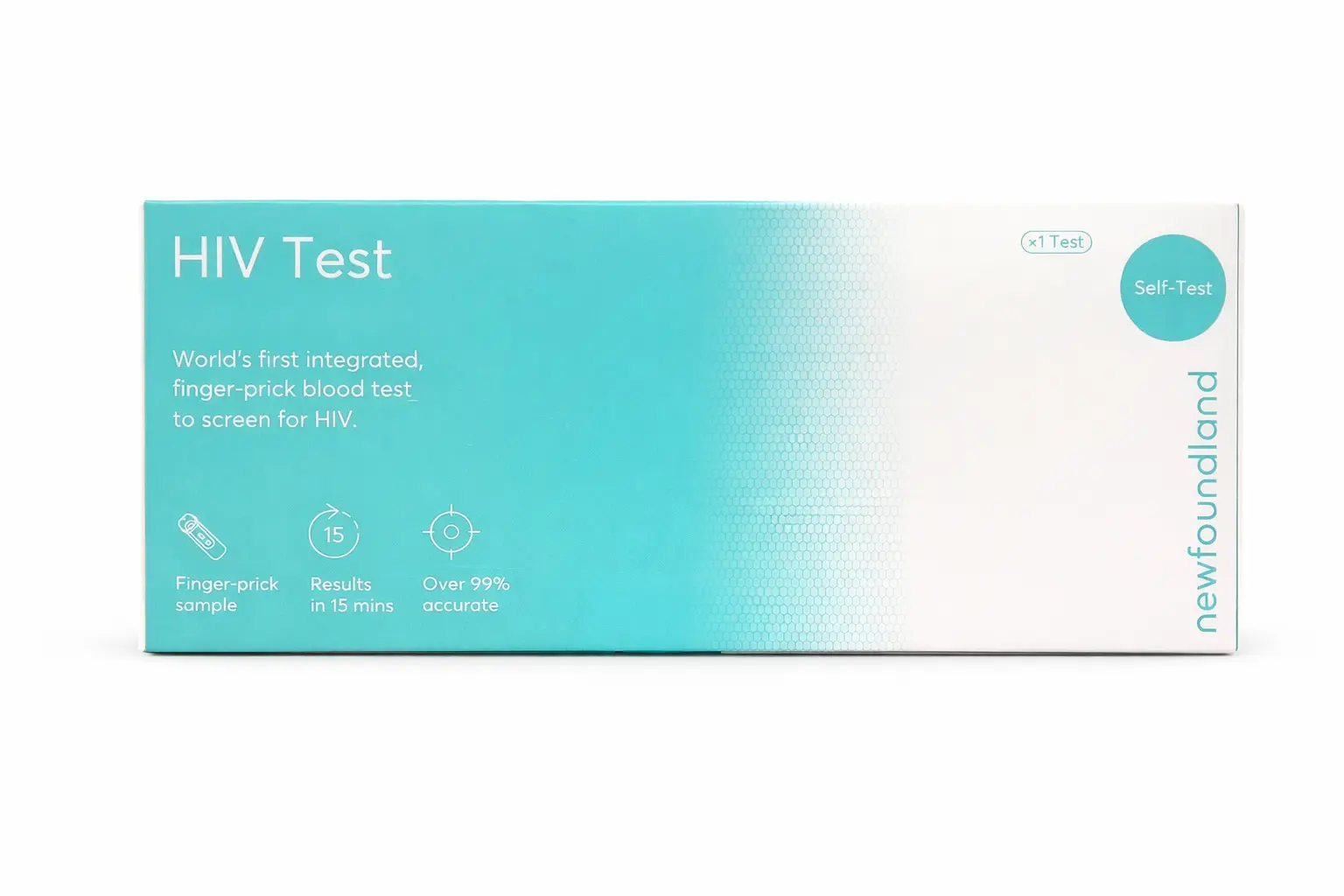
HIV Test
The Newfoundland At-Home HIV Test Kit is a rapid self-test that allows you to check for HIV antibodies using a simple finger-prick blood sample. It provides a quick result in the privacy of your own home and is intended for people aged 18 years and over. Always follow the instructions provided in the kit.
Select Form
This at-home HIV test kit is designed to help you know your HIV status quickly and conveniently. The test detects antibodies to HIV-1 and HIV-2 in a small blood sample obtained from a finger prick. Results are typically available within minutes once the test is complete.
HIV (human immunodeficiency virus) is a virus that attacks the immune system. Early detection enables prompt access to care, treatment, and support. A reactive (positive) result suggests possible HIV infection and requires confirmation through laboratory testing by a healthcare professional. A non-reactive (negative) result means no HIV antibodies were detected at the time of testing, but if the exposure was recent, retesting at a later date may be advised due to the HIV window period.
This test does not replace clinical diagnosis and should be used as part of a broader sexual health strategy that includes regular professional testing and safe practices.
What does this home HIV test check for?
It detects HIV antibodies in a small blood sample obtained via a finger prick.
Who can use this test?
This test kit is intended for adults aged 18 years and over seeking to check their HIV status.
This test kit is intended for adults aged 18 years and over seeking to check their HIV status.
Follow the instructions in the kit. A sterile lancet is used to collect a small drop of blood from the fingertip onto the test device.
How long until I get a result?
Results are typically available within minutes after completing the test procedure as directed.
What does a positive (reactive) result mean?
A reactive result suggests that HIV antibodies were detected. You should seek confirmatory laboratory testing and professional medical advice as soon as possible.
What does a negative (non-reactive) result mean?
A non-reactive result means no HIV antibodies were detected at the time of testing. If your last possible exposure was recent (within the HIV window period), you may need to test again later as advised by a healthcare professional.
Can I rely on this test for a definite diagnosis?
No. A positive result from this at-home kit must be confirmed in a clinical setting. A negative result does not rule out early infection during the window period.
If I’ve had a recent possible exposure, when should I test?
Discuss timing with a healthcare professional, as testing too soon after exposure may not detect HIV antibodies. You may be advised to wait and retest according to recommended intervals.
Do I need to see a doctor after using this test?
Yes. Confirmatory testing is required for positive results, and it’s recommended to consult a sexual health clinic or GP for any concerns or questions about your HIV status.