
 Deliver within 90 minutes*
 UK Registered Pharmacy
 Discreet, Confidential Service

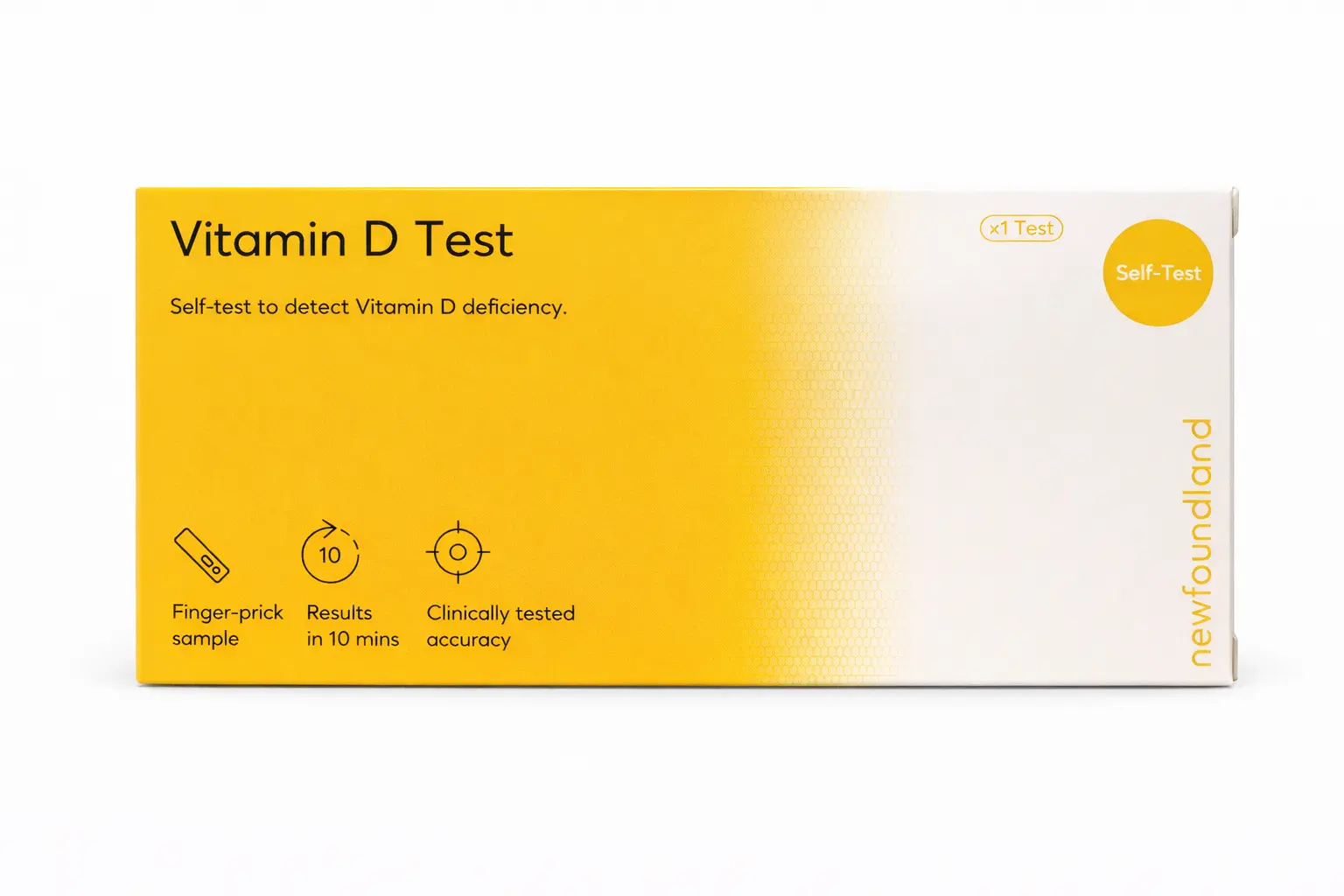
Vitamin D Test
The Newfoundland At-Home Vitamin D Test Kit is a simple home test that measures your vitamin D levels using a finger-prick blood sample. It helps you understand whether your vitamin D status is within the normal range or if you may need to adjust your diet, lifestyle, or supplements. Always follow the instructions provided.
Select Form
Vitamin D plays an important role in bone health, immune function, and overall wellbeing. Levels can vary depending on sun exposure, diet, age, skin type, and lifestyle factors.
The Newfoundland Vitamin D Test Kit allows you to collect a small blood sample at home via a finger prick. The sample is then processed according to the kit instructions, and results indicate your vitamin D status. This information can support discussions with your healthcare professional about whether you need to take supplements or make lifestyle changes.
This test is not a substitute for clinical diagnosis. Results should be interpreted alongside symptoms and clinical evaluation if required.
What does the test measure?
This kit measures vitamin D levels in your blood, typically reported as the concentration of 25-hydroxyvitamin D (25(OH)D), the form used to assess overall vitamin D status.
Who is this test suitable for?
It is designed for adults who want to check their vitamin D status at home. If you have specific health concerns, consult a healthcare professional before testing.
How do I collect the sample?
Follow the kit instructions. A sterile lancet is used to collect a small drop of blood from your fingertip onto the test device or sample card provided.
When should I test?
You can test at any time if you have concerns about low vitamin D (e.g., during winter months, limited sun exposure, darker skin, or symptoms like fatigue or muscle weakness). Specific timing may be advised in the instructions.
How long until I get a result?
Follow the kit’s directions; many at-home kits provide results within a set timeframe once the sample has been processed.
What do the results mean?
Results will indicate whether your vitamin D level is within the normal range, insufficient, or deficient. The exact cut-offs are provided in the kit’s information. A low result may suggest you need to increase sun exposure, dietary sources of vitamin D, or consider supplements under medical guidance.
Is this test as good as a lab test?
At-home tests provide useful insight into your vitamin D status, but they are not a clinical diagnosis. A formal blood test at your GP or clinic may be recommended if levels are very low or if you have symptoms.
Can children use this test?
Home vitamin D testing is generally intended for adults. For children or babies, seek advice from a healthcare professional before testing.
What should I do if my results are low?
Discuss your results with your GP, pharmacist, or another healthcare provider. They can advise on appropriate supplements, dosing, and follow-up testing if needed.