
 Deliver within 90 minutes*
 UK Registered Pharmacy
 Discreet, Confidential Service

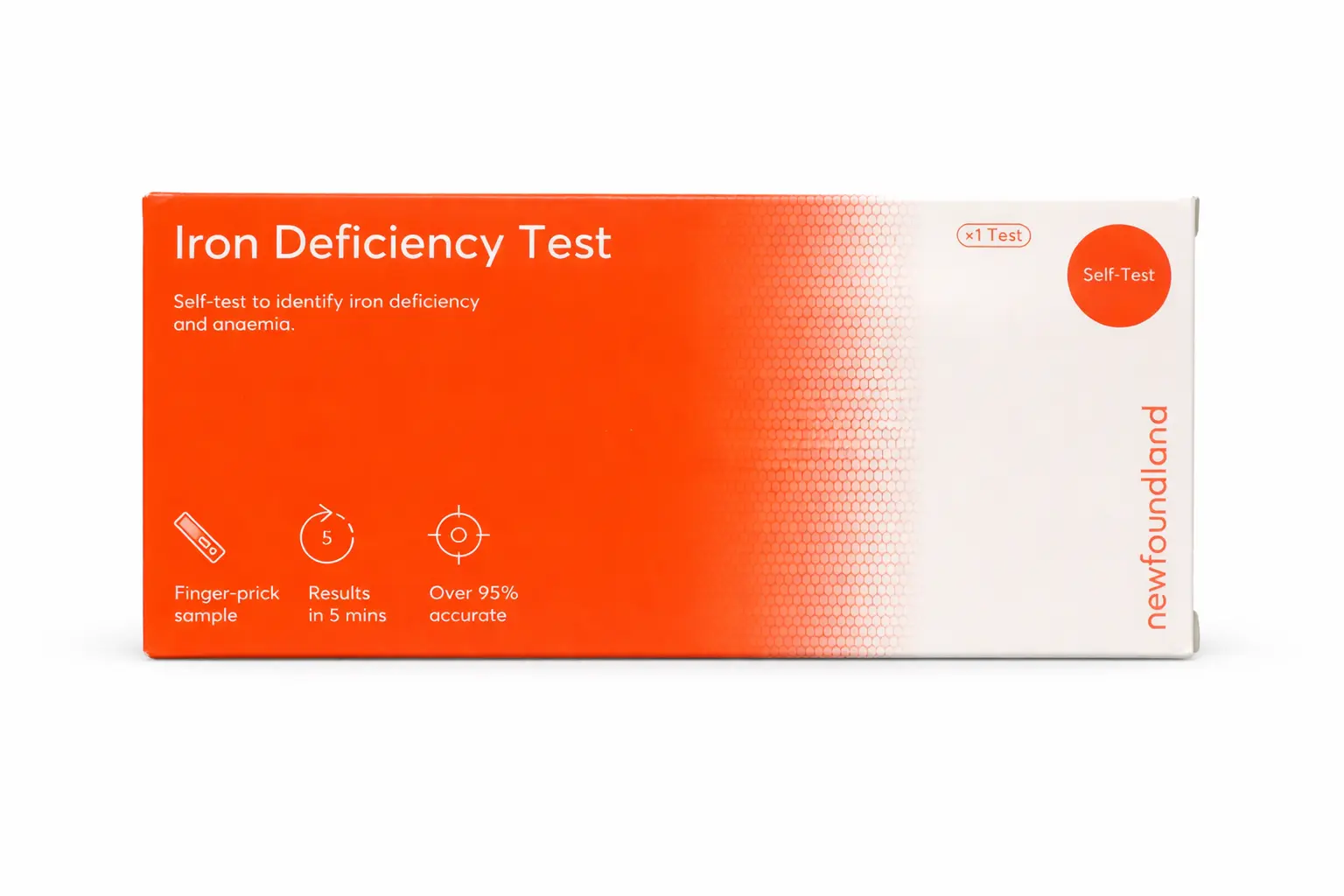
Iron Deficiency Test
The Newfoundland At-Home Iron Deficiency Test Kit allows you to check your blood iron status using a simple finger-prick blood sample at home. It helps identify low iron levels that may indicate iron deficiency or anaemia, supporting discussions with your healthcare professional. Always follow the instructions in the kit.
Select Form
Iron is essential for the production of haemoglobin, the protein in red blood cells that carries oxygen around the body. Low iron levels can lead to symptoms such as fatigue, weakness, shortness of breath, pale skin, and headaches. An iron deficiency test can provide insight into whether your iron levels are within a normal range or suggestive of deficiency.
The Newfoundland At-Home Iron Deficiency Test Kit typically includes everything needed to collect a small blood sample via a finger prick. After collecting the sample, you process it according to the kit instructions to obtain your result.
This test is not a substitute for clinical diagnosis. Results should be interpreted in combination with symptoms and, if needed, confirmed by formal blood tests ordered by a healthcare professional.
What does this test measure?
It assesses your blood iron status, often by measuring markers such as haemoglobin or ferritin (depending on the kit design) to indicate whether you may be iron deficient.
Who is this test for?
It is designed for adults who have symptoms suggestive of low iron or who want to monitor their iron status. Consult a healthcare professional if testing for children.
How do I collect the sample?
Follow the instructions in the kit. A sterile lancet is used to collect a small drop of blood from your fingertip for analysis.
When should I take this test?
You may test if you have symptoms of low iron (e.g., tiredness, breathlessness, paleness) or if you are at higher risk (e.g., heavy menstrual bleeding, pregnancy, vegetarian/vegan diet). Check the kit instructions for any specific timing guidance.
How long until I get a result?
Results are typically available within the timeframe stated in the kit instructions once the sample is processed.
What do the results mean?
Your result will indicate whether your iron status is within a normal range or suggestive of insufficiency or deficiency. Low levels may warrant a clinical review and follow-up tests by a healthcare professional.
Is this as accurate as a lab test?
At-home kits provide useful insight but are not a definitive clinical diagnosis. If results suggest low iron or if symptoms are significant, formal blood tests and clinical assessment are advised.
Can I test more than once?
Yes, but follow guidance in the instructions and consider discussing repeated testing with a healthcare professional.
What should I do if my result indicates deficiency?
Discuss your results with your GP, pharmacist, or another healthcare provider. They can advise on further testing, diet changes, or iron supplementation if appropriate.